Door 01 · The flagship engagement
Your sellers and the managers who run them, trained together on your live deals. Four phases, one engagement, and a platform built on your own content so the method is still running in month six.
§1 The Problem
Not because the trainer was bad. Because of four structural things nobody fixed:
It was taught on invented examples. Role-plays about fictional customers teach people to be good at role-plays. Nothing transfers to the call at 9:40 on Monday.
The managers were not in the room. They approved the budget and went back to their inbox. Two weeks later they are asking for the old forecast in the old format, and the team reads that correctly as: this did not really change.
Nothing was written down that outlives the trainer. The energy leaves when I do. If the scripts, the objection map and the coaching cadence do not exist somewhere the team actually opens, the second month erases the first.
Nobody agreed what would change. If we do not fix the number before we start — conversion, cycle length, deals per seller — then afterwards everyone gets to have an opinion instead of an answer.
§2 The Engagement
Before I design anything, I listen to how your team actually sells. Live calls or recordings, a ride-along, interviews with your best and your struggling seller, and a look at where deals die in your pipeline. Most of what a company believes about its own sales problem is one layer above the real one.
You get: a written diagnosis and the target number we are moving
The programme is built around your market, your objections, your price point. The three instruments stay the same; everything they are applied to comes from your business. No stock deck. Managers get their own track, designed at the same time, not bolted on afterwards.
You get: the programme scoped, agreed and dated
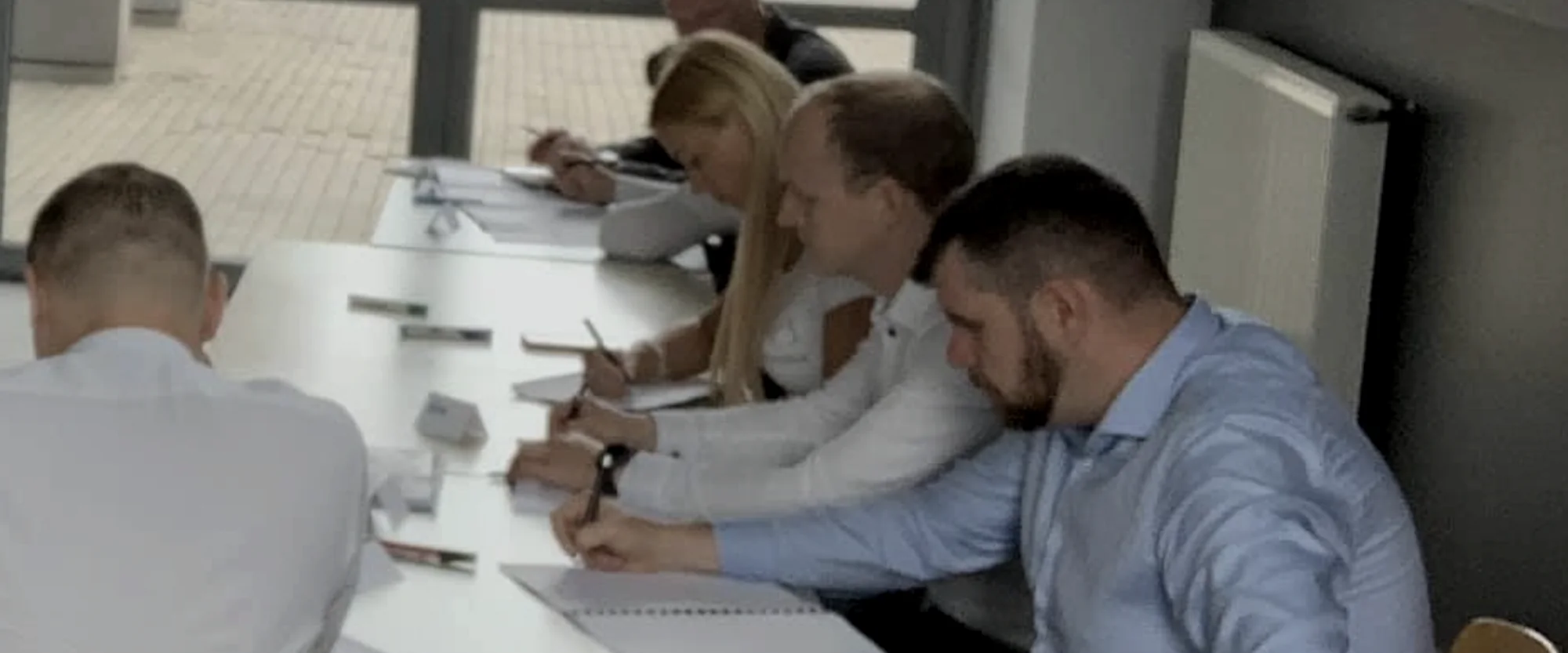
In the room, on your real deals. Sellers drill the Journey, the Deal Line and the language patterns until they stop being techniques. Managers work the same instruments on the conversations they will have with their own people. Everyone practises in front of colleagues, which is harder than practising in front of customers — deliberately.
You get: scripts, an objection map, and a team that has already used both
The phase most training skips, and the reason most training fails. The manager leaves with a coaching cadence: what to listen for, what to ask, what to correct and in what order. We reconvene after the team has run it live, take the calls that went wrong, and fix them. And — where you want it — the whole programme gets built into a system your team uses every week.
You get: a manager who can run this without me, a follow-up session that proves it, and optionally the platform below
§3 The Deliverables
Written, in your language, about your product. Not slides from my archive.
§4 The Platform
Optional, and the reason this engagement does not evaporate. The skill library from your training, role-play against an AI counterpart, call recordings evaluated against your standards, decision-maker research and a full meeting script from a customer’s website — with a manager layer that delegates, gives live feedback and reports every day.
Every sales trainer promises the learning will stick. Mine is the only one I know of that leaves behind software built on your own content to make sure it does. Two weeks after I go, the method is not in a notebook somebody lost. It is in a system the manager runs.
§5 Scope
The day rate is fixed and quoted excluding VAT. Everything around it — length, cohort, format, platform — is scoped on the first call:
For shape: a recent in-house programme ran four sessions across two weeks — sixteen hours in total, roughly 30% theory and 70% practice on the team’s own live deals. Yours will be different. The diagnosis decides, not a package.
It is not a motivational keynote. If you want a day that feels excellent and changes nothing by Friday, there are cheaper and better options than me — and I will say so on the call rather than take the booking. It is also not a good fit for a team whose problem is the product, the pricing or the pipeline; training a seller to sell something the market has already rejected is expensive theatre. Part of the free scoping call is deciding honestly whether your problem is one I can fix.
Finale One Conversation
Thirty minutes, free. We look at where your deals are dying and decide whether a programme is the right answer. If it isn't, you'll leave with the diagnosis anyway.
Book the Free Scoping Call